
I'm the office administrator for a 120-person manufacturing company. I manage all test and measurement equipment ordering—roughly $400,000 annually across 30 vendors. I report to both operations and finance, which means I feel the "get it cheaper" pressure and the "it has to work" reality at the same time, every single week.
Here's my conclusion after five years of doing this: I refuse to buy cheap measurement equipment. Not because I enjoy spending money. Not because I'm loyal to any brand. I refuse because I've watched the savings from cheap tools evaporate in rework, downtime, and client relationships. The math is not subtle.
The moment that cemented this was March 2023. Our CMM department flagged a batch of fixtures that wouldn't hold repeatability. The root cause? A "great deal" on generic fixtures I'd approved two months earlier. We saved about $300. The rework, overtime, and expedited shipping cost us north of $4,000. The vendor wouldn't accept returns—"normal wear," they claimed. That's when I started reading spec sheets the way an auditor reads a contract.
The Real Cost of Cheap CMM Fixtures
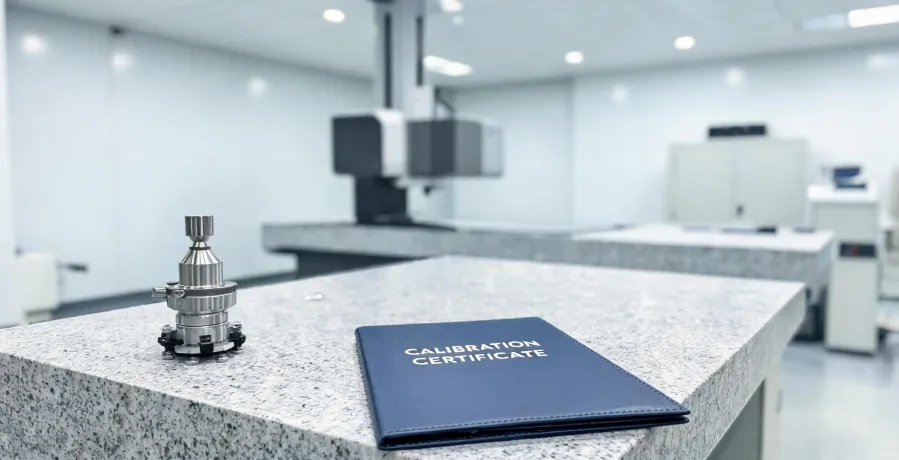
People ask why we buy Renishaw CMM fixtures when cheaper alternatives exist. It's not brand prestige. Renishaw's modular system is engineered for repeatability: kinematic mounts, precision dowel locations, rigid base plates. According to ISO 10360, CMM measurement uncertainty depends on the entire measuring system—including fixturing. A fixture that flexes or drifts isn't just less accurate. It's less truthful. And a CMM that gives confident-but-wrong data is worse than no CMM at all, because you only discover the problem after parts have shipped and a customer's QC department rejects them.
I didn't fully grasp this until the 2023 incident. After we switched back to Renishaw fixtures, our CMM operators noticed the difference within a week. Measurements stopped drifting. The arguments about "is it the part or is it the setup?" disappeared. That silence was worth more than the fixture price difference.
Renishaw Linear Encoders: Same Logic, Bigger Consequences
Renishaw linear encoders are another line item I defend to finance every year. Our CNC machines use them, and accounting periodically asks why we don't source cheaper alternatives. The answer isn't just published accuracy—it's environmental robustness. A shop floor is a hostile place: coolant mist, temperature swings, vibration, airborne grit. Renishaw designs sealed encoder variants for exactly those conditions. That engineering matters more than the resolution spec.
The hard way we learned this: a marginally cheaper encoder without proper sealing failed in our dusty environment within months. And when position feedback fails, the machine stops. Downtime on a CNC costs us about $150 an hour in lost production. An encoder that saves $200 upfront but causes two days of downtime across a year isn't a bargain. It's a liability wearing a bargain costume.
This is the counterintuitive part that most people miss: accuracy is overrated in the short term; repeatability is what actually matters. A tool that's consistently off by 1% can be calibrated and trusted. A tool that's randomly off by 0.1% is worthless—you can't compensate for chaos. That argument is what finally got our CFO nodding.
A T-Series Thermal Imaging Camera Is a Diagnostics Tool, Not a Toy
On the automotive side of our business, we use a T-series thermal imaging camera for electrical diagnostics, injector failures, and exhaust leak detection. The T-series category is the professional workhorse tier—built for technicians who need real thermal sensitivity and reliable calibration, not just a pretty picture.
I've evaluated the budget alternatives. A phone-attachment thermal camera is fun for spotting a hot wire, but it won't reliably resolve a 2-degree delta across an engine block. Lower NETD (thermal sensitivity) means smaller temperature differences get lost in noise. Lower resolution means you can't see the fault until it's already catastrophic. And cheap sensors drift out of calibration sooner—which is the worst failure mode of all, because the image still looks plausible.
Our T-series camera was a legitimate capital purchase. It paid for itself in about a year by cutting diagnostic time on intermittent electrical faults by half. That's the return-on-investment argument I bring to finance, and it's more persuasive than "we need the best." (Which, honestly, is what I used to say before I learned to speak their language.)
I'll admit a gap in my understanding: I've never fully grasped why two thermal cameras with similar published specs can differ by $2,000 in price. My best guess is sensor grading—the actual components that meet the spec vs. the ones that barely pass. But here's what I do know from field use: the $400 units produce images that look mostly okay and miss the subtle failures. The T-series unit shows the problem clearly, the first time. (Note to self: trust field results over spec sheets.)
Fluke vs Klein Multimeter: The Question Everyone Asks Me
Every few weeks, a technician or a shop owner asks the same thing: Fluke vs Klein multimeter—which one should we buy? I've bought both. I've broken both. Here's my honest answer.
Klein makes good tools. For basic electrical work—voltage checks, continuity tests, residential and light commercial circuits—a Klein is a solid choice at a fair price. I would not talk anyone out of buying one for that work.
But for multimeter automotive work, I buy Fluke. The reason is not fashion; it's true-RMS measurement. Modern vehicle electrical systems are full of PWM signals, variable-frequency drives, and noisy waveforms. A true-RMS meter gives you accurate readings on those non-sinusoidal signals. A non-true-RMS meter reads low, gives up, or shows you nonsense that looks like data. In automotive diagnostics, that's a trap.
Durability is the other factor. Meters get dropped on concrete, splashed with coolant, and dragged across engine bays. Fluke's cases and strain reliefs survive that abuse. The Fluke 87V is the industry workhorse for a reason—it currently runs about $450–500 (based on distributor quotes, January 2025; verify current pricing). That's more than the $150–200 Klein alternative. But a meter in professional use gets handled thousands of times a year. The total-cost difference over a five-year lifespan is pennies per use. The trust difference is everything.
"Measure twice, cut once" isn't just a carpenter's proverb. It's the whole business case for serious measurement tools.
But What About the Pushback?
I hear the objections. "Not every shop needs top-tier tools. We're not a calibration lab." Fair enough. There are places to save in any equipment budget, and I've found plenty. But measurement equipment is a specific category—it's how you verify everything else. If your verification tool lies, drifts, or dies, the cost doesn't stay in that line item. It cascades into scrapped parts, honored warranties, and lost credibility.
"Can we rent or share these tools?" For occasional use, sure. For daily production work, no. Renting is a scheduling nightmare, and sharing creates an accountability problem: if a shared meter gets dropped and never recalibrated, nobody knows. Ownership gives you control over calibration schedules.
"Any multimeter will do." I've seen a budget meter read 12.6V on a battery that was actually at 11.8V. In automotive diagnostics, that's the difference between "battery's fine, check the starter" and "battery's weak, load-test it." The first path leads to a misdiagnosis, an hour of wasted labor, and a customer who doubts everything else you say. I'm honestly not sure why so many shops accept that risk to save a hundred bucks.
Quality in Measurement Is Quality in the Product
Here's the summary of five years of purchasing decisions: the output of any measurement system is only as credible as its least reliable component.
The fixture affects the measurement. The encoder affects the machine's position. The thermal camera affects the diagnosis. The multimeter affects the repair decision. Cutting corners on any of them is like putting bargain tires on a delivery van—you save money until the day it costs you a late shipment, an angry client, or worse.
So yes, I buy the Renishaw fixtures. I buy the Renishaw linear encoders. I buy the T-series camera for the diagnostics bay. I buy Fluke meters for the automotive toolboxes. And I am comfortable defending every one of those line items in a budget review—because I can point to specific incidents where the cheap option failed and cost more than the quality option ever would have.
If you're making the same decisions—purchasing manager, shop owner, or a technician tired of recalibrating tools that shouldn't drift—my advice is simple: the problem with cheap measurement isn't that it's inaccurate. It's that you can't trust it. And trust is the whole job.