
How I got here (or: why I thought saving $600 was smart)
In June 2019, I was the maintenance lead at a mid-size food processing plant in Ohio. We were six weeks out from a scheduled conveyor upgrade, and I needed six pressure transmitters, two WIKA water pressure gauges, and eight zero speed sensors for the line's speed monitoring system.
I'd been buying from the same distributor for three years. But this time, a new quote came in from another supplier — $600 less, with a promised "4–5 week delivery." That was a $600 saving on a $9,200 order. Not huge, but I figured it was worth trying a new vendor.
I sent the PO on June 14. Delivery window: week of July 15.
The install crew was scheduled for July 22.
See the problem? I had exactly one week of buffer. And I signed off on it anyway.
The delay nobody warned me about
The first red flag showed up in early July. I called to confirm ship date. The supplier's rep said the items were "in transit." Fine, I thought.
A week later, I called again. "Our system shows them arriving at the warehouse on July 26." Wait — July 26? That was after the install window.
I asked what happened. The rep explained that the WIKA transmitters were in stock, but the zero speed sensors were on backorder from a sub-supplier. "We should have flagged that," she said.
Should have. That's a phrase I've come to hate.
The install team showed up on July 22. They had the mounting hardware, the wiring, the cable trays — everything except the transmitters and the sensors. They stood around for two days, then left. We rescheduled for August 5.
Cost so far: $2,800 in idle labor.
What the WIKA documentation taught me (while we waited)
Here's where things got interesting. While the transmitters were delayed, the WIKA water pressure gauges — which were part of the same order, weirdly — arrived on time (July 10). And they came with something I didn't expect: a full technical binder.
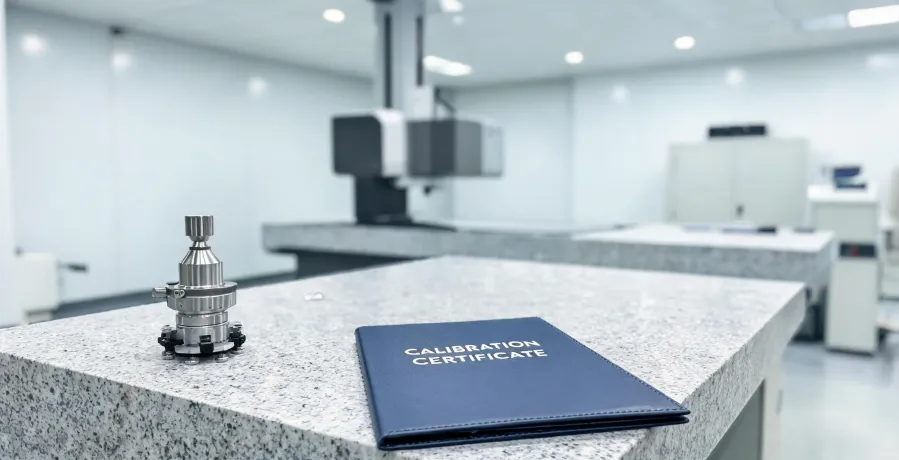
Not a printed spec sheet. A full documentation package — wiring diagrams, calibration certificates traceable to national standards (per IEC 61298 for process measurement), installation torque specs, even a troubleshooting flow chart. It was genuinely useful.
In the meantime, I was trying to figure out the sensor situation. We'd considered Balluff for the zero speed sensors originally — they have a solid reputation in industrial sensing, and we'd used their proximity switches before. But the quote for this specific application came in higher, and the lead time was longer. So we went with another brand that promised faster delivery.
Yeah. That turned out to be a mistake — or rather, the mistake was trusting a fast promise without checking the supply chain behind it.
The sensor mix-up that made things worse
When the transmitters and sensors finally arrived on August 2 (three days late, even after the reschedule), we found another problem: the zero speed sensors had the wrong output voltage. We'd needed 24V DC; they'd shipped 12V DC.
The part numbers matched. The datasheet we had said 24V. But somewhere between the order and the shipping dock, someone picked the wrong variant.
We had to return them. That added another 10 days to the timeline. The install finally finished on August 14.
Total damage: $2,800 idle labor + $1,600 expedited return shipping + $4,000 in lost production (the conveyor couldn't run at full speed until the sensors were installed correctly).
That's $8,400 to save $600.
The part I still kick myself about
The transmitters themselves were fine. The WIKA pressure transmitter we received — the A-10 model, which we'd specified — worked exactly as expected. The documentation was solid. No complaints there.
My regret isn't about the product. It's that I didn't put the delivery date in writing as a condition of the order. The verbal promise of "4–5 weeks" meant nothing when things went sideways. If I'd gotten it in writing, we might have had grounds to dispute the idle labor cost — or at minimum, I'd have known to keep a backup vendor ready.
One of my biggest regrets: not ordering the sensors from two sources simultaneously and canceling whichever shipped first. That would have cost maybe $300 in duplicate holding fees, but it would have saved $8,400.
The other thing I should note: we were also refreshing some lab equipment around the same time — an Eppendorf 5810R centrifuge was on the list for our quality lab. Different product, different vendor, same lesson. When we asked that rep for a written delivery date, he gave us one immediately, with a penalty clause for late delivery. That's now our benchmark. If a vendor hesitates to commit in writing, that's a deal-breaker.
What I do differently now
Three things changed after August 2019:
- Every PO has a written delivery date with a buffer. If a supplier won't commit to a date in writing, we don't order from them — full stop. I don't care if they're 20% cheaper.
- We verify supply chain status for anything not in stock. "In stock" from a distributor doesn't mean the sub-supplier's inventory is in stock. I now ask: "Where is this physically located right now?" It's a simple question that has caught eight problems in the past two years.
- We budget for certainty on critical deadlines. On the conveyor project, the total order was around $9,200. Paying $400–600 extra for a guaranteed delivery window with confirmed stock would have been the no-brainer choice. Instead, we paid $8,400 in hidden costs. The math isn't close.
There's something satisfying about finally having a procurement process that works. After three years of off-and-on mistakes (some more expensive than others), the checklist we use now has caught 11 potential issues before they became real ones. That's $8,400 well spent — in reverse.
The bottom line
If you're sourcing industrial instrumentation — pressure transmitters, WIKA water pressure gauges, zero speed sensors, whatever — the cheapest quote is almost never the cheapest outcome.
A $600 discount on an order is a rounding error compared to the cost of a delayed install. A written delivery commitment is worth more than a 5% price break. And a vendor who can't tell you exactly where your parts are sitting right now is a red flag, not a bargain.
I still use that WIKA documentation binder. It's on the shelf in my office, and I flip through it more than I'd like to admit. But I also keep a checklist taped to the inside cover. It starts with one line: "Did you get the delivery date in writing?"
That line cost me $8,400 to learn.