Traceable
Documentation follows the instrument and keeps the chain from sensor to certificate visible.

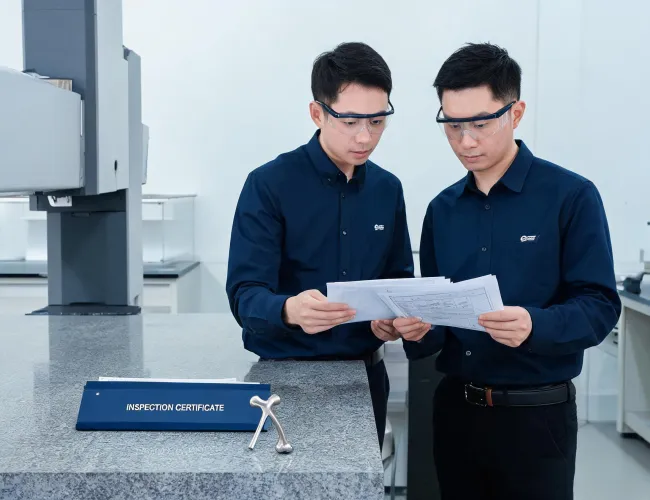
Renishaw is presented here as an authority-expert partner for buyers who cannot separate the instrument from its evidence trail. The brand experience is intentionally disciplined: clear categories, restrained language, technical checkpoints and service records that help a buyer defend the decision after installation.
Every recommendation should survive the handoff from engineer to quality manager to procurement file.
The Renishaw site is written for teams that work with narrow tolerances and high accountability. A measurement decision may begin with a simple product search such as a CMM probe, encoder, laser interferometer or Raman microscope. In practice, that search quickly becomes a chain of questions about accuracy, response time, fixture conditions, sample environment, calibration evidence and the person who will own the record later.
That is why the website avoids a broad marketing posture. It treats product selection as a controlled review rather than a quick browse. The home page starts with measurement disciplines and accountability, the product page uses family-level selection, the service page explains documentation flow, and the industries page translates the same evidence language into specific production contexts.
The tone is direct because the audience is technical. It does not hide risk behind slogans. Instead, it names the work that must happen before a model number is released: compare the requirement, identify the proof path, plan calibration timing and make sure the final instrument package can be defended when the process is audited.
Documentation follows the instrument and keeps the chain from sensor to certificate visible.
Recommendations are tied to geometry, signal, range and evidence requirements rather than loose product labels.
Page structure, copy and support language stay restrained so technical buyers can scan without friction.
Calibration and support planning sit beside product selection because handoff quality matters.
In metrology purchasing, the weak point is often not the instrument itself. It is the gap between the application engineer's assumptions, the purchasing team's line item and the quality manager's audit file. Renishaw's site structure is built to narrow that gap. Product categories are limited to approved main categories, seed statistics are used consistently, and industry narratives point back to inspection evidence instead of generic productivity claims.
The same principle shapes the visual system. The warm amber palette gives the site a distinct industrial character, while the deep navigation and compact cards keep it serious. Small-radius components support the authority-expert persona by making the interface feel engineered, not decorative.