
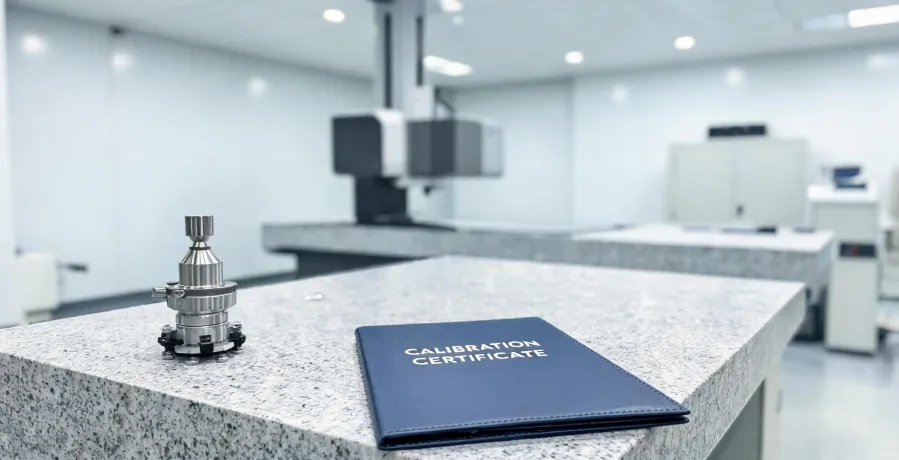
Five years ago, I inherited the budget for every measurement device in our plant - CMM probes, handheld meters, lab instruments - and I made an assumption I now cringe at. I assumed accuracy was a feature you pay for once, when you buy the device. Calibration was just an annual tax that followed it.
Then two things happened in the same year. A customer audit flagged inconsistencies in our calibration records, and a batch in our mixing area had to be disposed of because someone trusted a pH reading that had drifted far from reality. Two failures. Different instruments. Identical root cause: I had been treating all measurement tools like one homogeneous expense category. They are not.
So here's the comparison I wish I had run six years ago. It is not a comparison between competing tools - nobody chooses a pH meter instead of a CMM probe. But these three families compete for the same annual budget, and they deserve to be judged side by side:
- CMM Renishaw probe systems and styli on our coordinate measuring machine;
- the Fluke 77 multimeter and Fluke 116 true RMS multimeter that our electricians carry;
- the Mettler Toledo pH meter on the laboratory bench.
I've compared them on three dimensions: the cost of being wrong, the real calibration workload, and where the money disappears. The answer surprised me.
Dimension one: what does a wrong reading cost?
Dimensional measurement is the most expensive place to fail. If the CMM gives a bad part a pass, that part travels through plating, assembly, and final inspection before anyone realizes a datum was off by thirty microns. Our last significant escape cost roughly $17,000 by the time we counted the rejected lot, the expedited replacement, and forty hours of overtime. The gatekeeper in front of that $17,000 was a $65 probe stylus. That is the moment you realize why a CMM Renishaw probe setup is the wrong line item to cut corners on.
Electrical measurement is a step behind on risk. A bad reading on a motor circuit produces a recurring fault that can eat service time for months. We chased one intermittent breaker issue for eighteen months and probably spent $3,800 in callbacks before somebody thought to check the meter's calibration sticker. That's real money, but it's not scrap-a-whole-lot money.
The pH meter is the quiet one. A dimensional error makes a loud noise when parts don't fit. A pH error is silent: the reading drifts by one point, the chemistry drifts with it, and nobody knows until the final lab test. One 500-gallon batch at the wrong pH cost us more than the meter's purchase price, the electrode, and three years of buffer solution combined. Small instrument, ugly downside.
Dimension two: calibration is not the same for all of them
CMM Renishaw probe calibration is about discipline, not just the annual service
Open the Renishaw CMM probe catalog and you won't see a one-size, one-price list. You'll find straight styli, star configurations, extensions, modules, and enough combinations to make a procurement manager's head spin. My first order from that catalog was a rookie mistake. I found cheaper alternatives labeled compatible, saved roughly $130 on ten styli, and then spent a full day watching probe calibration fail while the CMM gave unstable results. The thread tolerance wasn't the same. In the end, I paid for the correct styli, the downtime, and the expedited shipping. The savings were imaginary.
Here's what I learned: on a CMM, probe calibration is not an annual event. It happens at the start of shifts, after every crash, and any time results start looking suspicious. The probe, especially the stylus, is the last physical point of contact with the part. It's not the place to test a generic alternative. A CMM Renishaw probe in good condition and correctly calibrated is cheap insurance. A bad one is an expensive mystery.
The Fluke 77 multimeter: a classic with a hidden cost
The Fluke 77 multimeter has been around so long it's basically the Corolla of handheld meters. Ours have survived drops, sparks, and probably a cup of coffee. The hidden cost isn't the meter itself; it's the certification loop. Accredited calibration runs somewhere in the $100-$200 range per unit at our lab. A few cycles of that, and you've paid more to certify the meter than you paid to buy it.
I'm not saying skip calibration. I'm saying ask the calibration provider whether your use case really demands the full accredited treatment, or whether an internal verification might be acceptable for a secondary meter. That conversation alone cut our multimeter-related spending by about 40%.
The Fluke 116 true RMS multimeter: when the upgrade earns its keep
The Fluke 116 true RMS multimeter is priced in the same neighborhood as the 77, and it's worth the upgrade in the right environment. True RMS readings matter when the waveform isn't a clean sine wave, and motor drives and VFDs produce some of the ugliest waveforms on the planet. If your techs are checking output voltages on variable-frequency drives and comparing them to nameplate values, a non-true-RMS meter will lie to them. The 116 fixes that.
My rule of thumb after comparing them: if your electricians spend more than a few hours a month around drives or HVAC equipment, buy the true RMS meter and sleep better. If they mainly check line voltage, continuity, and resistance, the 77-style meter is still a workhorse.
The Mettler Toledo pH meter: small purchase, daily ritual
I lost count of how many times newer lab people have typed "how to calibrate Mettler Toledo pH meter" into a search engine. The answer is standard: fresh pH 7.00 and pH 4.01 (or pH 10.01) buffers, rinse the electrode between buffers, let the reading stabilize, and check the slope.
But the mistake in our facility was thinking pH calibration is like multimeter calibration, an annual event. For a pH meter, it's a daily discipline. Buffers expire. Electrodes dry out if they're not stored in storage solution. A $120 electrode failure after improper storage costs more than the electrode itself, because the meter gets sent out for repair due to a problem that didn't exist. The instrument was never the expensive part. Training, buffers, electrode care, and the habit of calibrating before use are the real budget items.
Dimension three: where the money actually hides
After six years of invoices, the pattern is clear. Pricing below comes from our own purchase records and distributor quotes as of early 2025. Verify current numbers before you rely on them.
- CMM Renishaw consumables are small relative to the risk: standard styli run $40-$150 in our recent orders, probe bodies are hundreds to thousands depending on the system, and an hour of CMM downtime often costs far more than the component that caused it.
- A Fluke 77 multimeter landed around $230 in our last purchase; a Fluke 116 true RMS multimeter was in the same range. Calibration certificates from an accredited lab run $100-$200 per unit per cycle.
- Our Mettler Toledo pH meter setup cost a few hundred dollars for the meter and electrode; the real spend is buffers, replacements, and the occasional expensive lesson about skipped calibrations.
The surprise wasn't that the dimensional equipment was expensive. It was that the least expensive instruments had the sneakiest total cost. A $200 multimeter quietly generates $200 in certification fees every year. A few hundred dollars of pH meter can generate a five-figure waste event if the routine falls apart. The expensive CMM probe only hurts you when you treat it like a commodity.
Decision advice: what to do with this comparison
Since this is a comparison, let me give you my actual conclusions rather than a diplomatic "it depends."
If you're a machine shop shipping tight-tolerance parts, keep your dimensional inspection chain clean. Use the Renishaw CMM probe catalog to select the right stylus for the application, don't substitute generic parts, and train operators to recalibrate the probe after every crash. This is not an area where I look for savings anymore.
If you maintain motors, drives, or HVAC equipment, the Fluke 116 true RMS multimeter is worth the upgrade over a basic meter. If you're only measuring clean line power, a 77-style meter is fine. For both, review the calibration interval with a metrologist; the interval, not the meter choice, is where the waste hides.
If you measure pH in any process, treat calibration as an operating procedure, not a lab chore. Put buffer bottles on a schedule. Write the "how to calibrate Mettler Toledo pH meter" steps into the work instruction. Replace electrodes before they fail, not after. The meter is the cheapest part of that system.
Look, no one buys a pH meter instead of a Renishaw probe. But the same person probably approves both purchases. In my spreadsheets today, line items are no longer grouped by device type. They're grouped by what failure costs, how often calibration is needed, and where the money actually goes. That one change made our measurement budget more effective than the year I tried to optimize it by price alone.