
- How I Compare These Two Sensor Worlds
-
Dimension 1: Precision Measurement vs Reliable Detection
-
Dimension 2: Vision Sensor—The Word That Muddies Everything
-
Dimension 3: Rotational Speed Sensors—Data Continuity Matters More Than the Logo
-
Dimension 4: Support, Lead Times, and Small Orders
-
So: Is Balluff a Good Brand for Sensors?
A few weeks ago, a customer called at 4:30 on a Friday. A rotational speed sensor had failed on a packaging line. Normal delivery for the OEM replacement was nine days. Their line had to run Monday morning. That call is my job, so I don’t start with one brand’s brochure. I start with three questions: How much time do we have? What’s feasible? And if we bet on the wrong sensor, what does that failure cost?
I’ve spent the last eight years coordinating rush orders for metrology and automation components—200+ emergency requests, if you’re counting. “CMM Renishaw” and “is Balluff a good brand for sensors?” often come from the same engineer. Not because they’re equivalent, but because both get typed into a search bar as “precision measurement.” Let’s unpack them.
The short version: Renishaw makes precision measurement systems. Balluff makes reliable industrial sensors. They overlap less than you think. “Better” depends on which problem you’re solving.
How I Compare These Two Sensor Worlds
I don’t compare by brand reputation alone. I compare four dimensions: application fit, data quality, environmental tolerance and integration, and support ecosystem. The brand that wins dimension one might lose dimension four.
Application fit
If I need to measure a machined part to ±1.5 µm on a CMM, I’ll be looking at Renishaw probes. That’s the CMM Renishaw world. If I need to confirm a pallet is present before a robot clamps, Balluff is a normal choice. Different animals.
Data quality
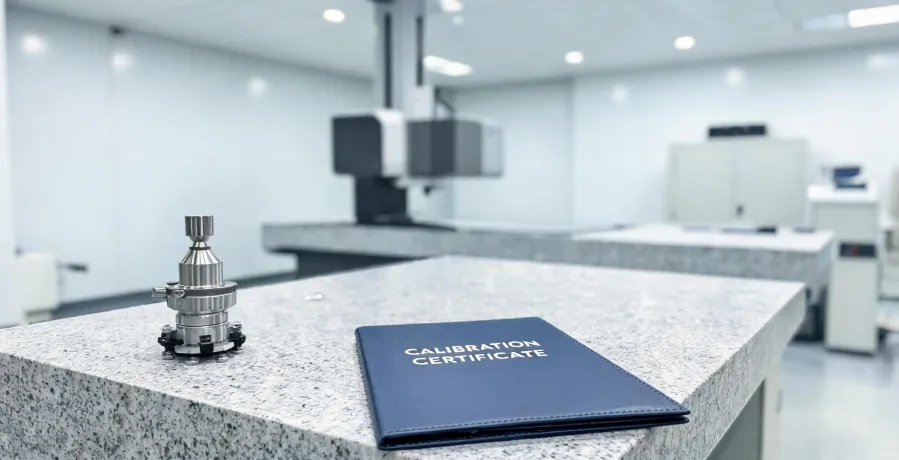
Precision requires traceability. Not every sensor needs a calibration certificate, but if the customer’s PPAP documents require one, “qualified” doesn’t help unless the supplier can show the chain.
Environment and integration
Balluff’s sensors are built for harsh shop floor conditions—IP67, IO-Link, quick M12 connectors. Renishaw’s equipment is also hardened, but it’s often designed to enable measurement rather than just detect a feature.
Support ecosystem
Support matters most when things go wrong. In my experience, Renishaw distribution tends to be specialized metrology people. Balluff’s channel is broader. Broad can be great—until the person on the phone can’t tell you whether their speed sensor will work with a 12-tooth gear at 5 Hz.
That last point is real. We once standardized a rotational speed sensor for a customer. I said “rotational speed sensor.” The distributor heard “proximity switch.” We discovered this when the test rig ran for a total of 20 seconds before the controller got garbage. Not the sensor’s fault. The same words, different meanings. I should have confirmed the output signal type first.
Dimension 1: Precision Measurement vs Reliable Detection
Renishaw’s core strength is measurement. The company made its name on CMM touch probes, then grew into encoders, laser interferometers, Raman spectroscopy, and machine tool probing. If you’re shopping for “cmm renishaw,” you are not buying a simple sensor. You’re buying a metrology loop: probe, algorithm, controller, and calibration.
For CMM work, the authority that matters is ISO 10360-2. When a probe system claims a length measurement error of, say, 1.9 µm, that’s the standard it is tested against. A vision sensor or a proximity switch is not held to that same criterion. No value judgment there—just a spec difference.
Balluff’s core strength is sensing. They make inductive, photoelectric, vision, magnetic, ultrasonic sensors, and more. They’re not trying to replace your CMM. They’re trying to make your machine aware of what’s happening. On the sensing side, when you’re comparing Balluff to other sensor brands, look for IEC 60947-5-2 on the datasheet. That’s the standard that defines switching behavior and environmental limits for inductive proximity sensors. It helps keep the comparison honest.
Conclusion from this dimension: A Renishaw CMM probe is a measurement instrument. A Balluff sensor is a detection device. If you use one in place of the other, you’ll measure too slowly or detect too sloppily—or both.
Dimension 2: Vision Sensor—The Word That Muddies Everything
Here’s where search intent gets messy. Engineers search “vision sensor” for completely different reasons.
- Renishaw isn’t in the business of $500 smart cameras. They make precision measurement systems that can use non-contact sensors—laser encoders, tool setters, and interferometers.
- Balluff makes vision sensors (the BVS series) that do barcode reading, contour verification, and part presence checks.
If you need to check whether a label is present, Balluff is a strong candidate. If you need to measure a turbine blade form to microns, a smart camera won’t cut it. I say that not because Balluff’s cameras are bad—they’re good. They’re just not CMMs.
I once managed a rush request for a “vision sensor” that turned out to be a sub-miniature laser displacement sensor for measuring gaps. The supplier quoted a vision camera. The result: two lost days and a very polite but frustrated engineer. We were using the same words but meaning different things. Discovered this when the camera arrived and couldn’t do anything with a crack width.
Rule: Name the output you need, not the product category. A measurement in mm is not the same as a pass/fail pixel count.
Dimension 3: Rotational Speed Sensors—Data Continuity Matters More Than the Logo
Rotational speed sensing is another place where “good brand” questions hide a spec problem. A rotational speed sensor usually produces pulses based on a gear or magnetic ring. The controller measures frequency and calculates RPM. If that’s your application, Balluff has solid options. I’ve used their magnetic speed sensors and found them robust, easy to mount, and fairly priced.
But if you need high-resolution angular position and speed feedback—the kind you need on a servo axis or a rotary table—a Balluff pulse sensor won’t get it done. That’s where Renishaw’s encoders, like the RESOLUTE absolute series, enter. High-end encoders output absolute position and speed feedback. They’re not just sensors; they’re part of the motion control loop.
So, is Balluff a good brand for rotational speed sensors? Usually yes, for simple RPM monitoring. For closed-loop positioning, you need a different class of sensor—and Renishaw is one of the brands in that class.
The data-versus-gut lesson: when we had to decide between Balluff and a high-end encoder for a retrofit, the cost analysis said Balluff. 35% cheaper, immediate stock, and a two-year warranty. The numbers were clear. My gut said no—I remembered a previous project where the customer’s contract required a calibration certificate for every motion component. We asked the distributor: “Can you provide a traceable certificate for this exact unit?” Silence. Not “no.” Silence. We chose the Renishaw solution at 60% more, and the quote came back with a certificate the same day.
Was that the right call? For that contract, yes. The lesson wasn’t “Balluff is unreliable.” It was “make sure the datasheet covers the requirement that lives outside the datasheet.” A lesson learned the hard way.
Dimension 4: Support, Lead Times, and Small Orders
Here’s my bias, and I’ll own it: I take small orders seriously. The supplier who helps you buy one $300 sensor isn’t just filling a spot—they’re being tested. If a distributor treats a small order like a nuisance, you don’t want to see how they treat a recall.
In my experience, Renishaw distribution can be hit or miss for small customers. When it’s good, it’s very good. When it’s off, small orders feel like an interruption. Balluff’s network is more accustomed to smaller OEM orders and can be easier for a fast quote. But that’s not universal. A quote delay says more about the local distributor than about the manufacturer.
Pricing? I’ve seen Balluff sensors cost 30–40% less than comparable positioning products. I’ve also seen a Balluff vision sensor quote for $450 and a Renishaw encoder quote for $1,800. Different devices, different cost bases. Budget comparisons matter, but only after you’ve defined the output. Otherwise you’re comparing a good deal on an apple to a premium price for a banana.
So: Is Balluff a Good Brand for Sensors?
Yes. Balluff is a good brand for sensors. It’s also one of the most respected names in industrial automation. But “good” alone doesn’t tell you where to put it on the BOM.
Use Balluff when:
- You need presence detection, photoelectric sensing, IO-Link communication, or robust RPM monitoring.
- You need industrial sensors that can survive dust, vibration, and everyday abuse.
- You need a product you can get quickly, with specs that are easy to compare.
Use Renishaw when:
- You’re building a CMM or replacing a CMM probe head.
- You need high-resolution encoder feedback for motion control.
- You need measurement data that can be traced to national standards.
- You’re doing Raman spectroscopy or laser interferometry.
If you still aren’t sure, start with the three questions I ask myself on every rushed order:
- What exactly is the output I need—a position, a speed, a pass/fail signal, or a calibrated dimension?
- How much time do I have? If it’s a Friday, the best product is the one that can ship before Monday.
- What’s the failure cost? If the answer is “$50,000 of downtime,” buy the brand with the best verification process, even if it hurts.
One more thing: a small order is not a test of whether a brand deserves a seat at your table. It’s a test of how the brand treats the person who will later place the big order. That applies to Balluff, Renishaw, and every sensor maker in between.
Compared. Period.