
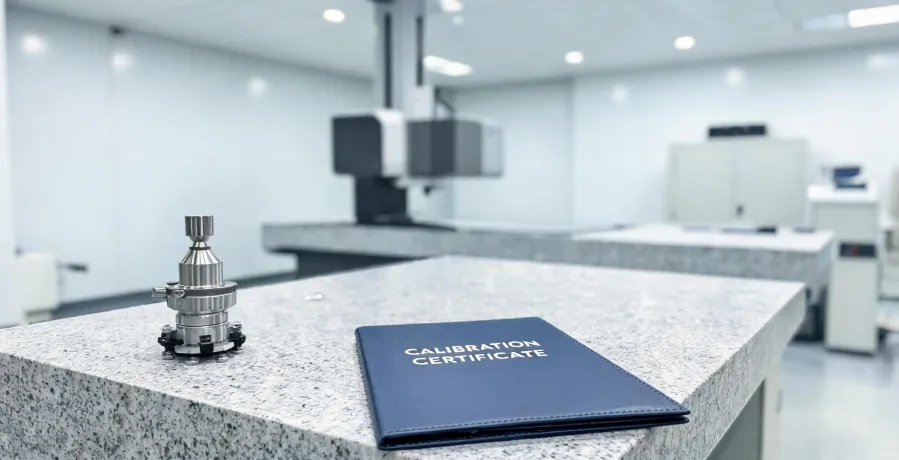
I spend my days reviewing measurement equipment specifications. Roughly 200+ items a year, across suppliers and standards. In 2024, I rejected 12% of first deliveries due to spec mismatches—dimensions off by microns, calibration certificates missing, materials swapped without notice. So when people ask me what to buy or how to test something, I tend to give direct, practical answers.
These are the questions I hear most, answered honestly.
What exactly does Renishaw make?
Renishaw manufactures precision measurement equipment. Their main product lines: CMM (coordinate measuring machine) probes and accessories, Raman microscopes for materials analysis, laser interferometers for calibrating machine tools, and linear or rotary encoders for precision motion control. According to Renishaw's product documentation (renishaw.com), these systems are used across aerospace, automotive, electronics, and medical device manufacturing. The relevant verification standard for CMM equipment is ISO 10360, which defines acceptance testing procedures for accuracy and repeatability—worth knowing if you're evaluating suppliers.
Here's the thing: you won't find Renishaw products at a retail store. They're sold to manufacturers and metrology labs. But if you've purchased a car, smartphone, or medical device in the last decade, Renishaw equipment probably verified critical tolerances somewhere in the production line.
In Q1 2024, we audited a supplier who claimed their machined parts were “within industry tolerance.” Our Renishaw-equipped CMM found a bore diameter 30 microns larger than the print spec—that's roughly one-third of a human hair. The supplier's in-house gauge didn't catch it. We rejected the batch and they redid it at their own cost. That's what precision measurement does: it catches what assumptions miss.
What can a Renishaw Raman microscope tell you?
A Raman microscope identifies the chemical composition of a material without destroying the sample. It focuses a laser on the material and analyses the scattered light, producing a molecular “fingerprint” of the chemical structure. Raman spectroscopy is a well-established non-destructive technique, with test procedures defined in standards like ASTM E1683.
Applications include pharmaceutical quality control (verifying active ingredient distribution), semiconductor failure analysis, polymer research, and even forensic examination of trace evidence. The non-destructive aspect is the key advantage—you don't have to cut or dissolve the sample to know what it contains.
What most buyers overlook is the software. The hardware is only half the system; spectral analysis software does the actual interpretation. Our lab setup, fully equipped, ran about $95,000. Or rather, $85,000 for the instrument plus $10,000 for installation and operator training. Now, if you only need Raman analysis a few times a year, service labs will run samples for a few hundred dollars each—you don't need to own the instrument.
How do you test a capacitor with a multimeter?
Set your multimeter to capacitance mode—the symbol looks like “–||–”. Discharge the capacitor first by bridging the leads with a resistor for a few seconds. Then connect the probes and read the display. A healthy capacitor reads close to its printed capacitance value. A dead one reads near zero or no value at all. An “OL” (over limit) reading usually means a short or open circuit.
If your multimeter doesn't have a capacitance mode, you can use resistance mode as a rough check: resistance starts low and climbs as the capacitor charges. But honestly, if you test capacitors regularly, spend the extra $30 on a meter that has capacitance mode. I should add that safety matters here—a charged capacitor can damage the meter or give you a genuinely unpleasant shock.
I made the classic beginner mistake in this exact scenario: tested a charged capacitor without discharging it and got a reading that made no sense. The meter was measuring the capacitor's stored charge, not its capacitance. Took me 30 minutes of troubleshooting before I realized what was happening. So glad I kept a basic multimeter at my workbench during that lab upgrade—almost donated it to a local school.
Which Fluke multimeter should you buy?
Fluke is a default recommendation in industrial electrical work for good reason: durability and consistent accuracy. But which model? That depends on what you're actually measuring.
For general electrical work—voltage checks, continuity testing, resistance measurements—the Fluke 117 is the practical sweet spot. It includes non-contact voltage detection and costs roughly $150 based on vendor quotes from Q4 2024; verify current pricing. Both the 117 and the 87V have published accuracy specs on Fluke's website; that level of documentation is part of what you're paying for.
For industrial maintenance involving three-phase systems, VFDs, or high-energy environments, the Fluke 87V has been the standard choice for decades. It handles complex signals better and has higher accuracy, but it costs $400–$450. Honestly, if you're not troubleshooting industrial control panels on a regular basis, that premium is difficult to justify.
My honest take: for home use, a $40 multimeter from any recognized brand handles 90% of tasks. The value of a Fluke isn't brand prestige—it's documented accuracy. If your readings influence someone's safety or a product's quality, certified accuracy is worth paying for. If not, don't overspend.
How much does a centrifuge cost?
Centrifuge prices vary massively by type and capability. From vendor quotes we received in the last year (verify current pricing):
- Basic benchtop centrifuge for clinical separation: $500–$2,000
- Refrigerated benchtop model with temperature control: $3,000–$10,000
- High-speed or ultracentrifuge for research applications: $15,000–$60,000+
What drives the price: maximum speed (measured in RPM or g-force), refrigeration capability, rotor options, and safety certifications. I've seen a lab spend $800 on a simple centrifuge for serum separation and be perfectly happy with it. A different lab spent $25,000 on an ultracentrifuge for protein isolation—also the right call. The right centrifuge is the one matched to your application, not the one with the highest specs.
Don't hold me to these exact figures. They're ranges from recent quotes, and prices shift with supply chains. But they give you a realistic starting point for budgeting.
When is “good enough” not good enough?
This is the question nobody asks but should. I've watched buyers focus on the purchase price and completely miss what a measurement tool actually costs over its lifetime.
Take a $50 no-name multimeter. It handles household voltage checks fine. But if you're using it for professional work that requires documented accuracy, you need yearly calibration certification—$100–$200 per year. The meter was the cheap part.
We encountered a similar issue with a supplier last year. I said “standard accuracy” in the purchase order. They heard “calibrated and certified.” We discovered the mismatch when the first instrument arrived without a single calibration document. Result: a two-week delay while we arranged third-party calibration and the supplier revised their procedures.
The most important question isn't “what's the price?” It's “what does this tool require to remain trustworthy?” In my experience, the answer is almost always more than people budget for.