
The short answer: three checks, in order
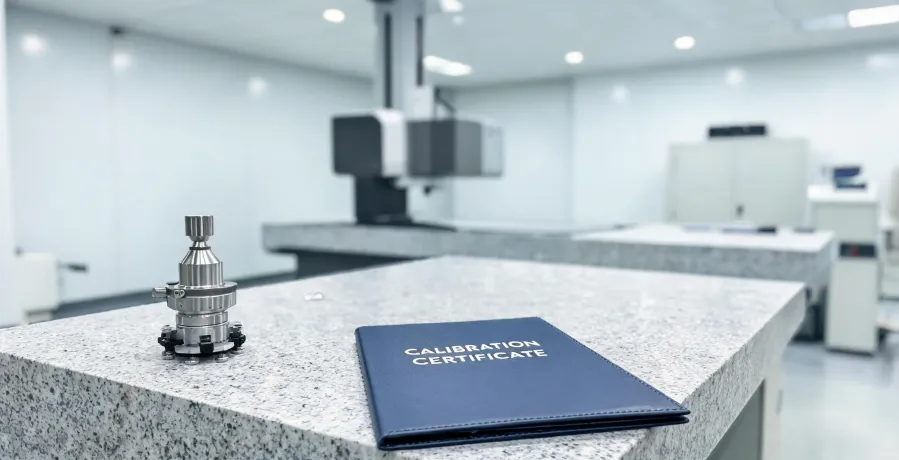
Before you approve a purchase order for water analysis instruments, do three things. Get calibration traceability in writing—NIST-traceable buffers or a documented factory certificate, not a verbal assurance. Budget roughly 60% of your total spend for sensors, membranes, and spares, not the meter itself. And download the calibration manual before the instrument ships, not the morning it starts drifting.
Speed, accuracy, traceability. In that order. That is the whole answer. Everything below is why it made my list.
Why you should trust a guy who wasted $4,200
I've handled water quality instrumentation orders for eight years. In that time I've made three mistakes big enough to show up in budget reviews, totaling roughly $4,200 in wasted reagents, replacement parts, and one very awkward call with a plant manager. Now I keep the checklist our team uses to stop other people from repeating them.
The first one still stings. In my first year (2017), I bought a pH meter Hach had just released because the spec sheet looked perfect and the price was right. I skipped the question about buffer traceability. Four months later our compliance samples came back flagged. The electrode was fine. The buffers weren't traceable to NIST, and our auditor wouldn't accept the data. We re-ran 60 samples—$1,150 in labor and reagents, plus a week of delay.
Did I believe the spec sheet next time? Partly. That's the problem.
The $4,200, broken down by instrument
The pH meter that wasn't (the $1,150 lesson)
Here is what I missed. According to EPA's 40 CFR Part 136, pH measurements used for NPDES reporting must follow an approved method—and approved methods require calibration against buffers traceable to NIST standards. ISO 10523 says the same thing using different words. The instrument does not care. A pH meter Hach sells and a pH meter from any other brand will both give you a reading. Whether that reading survives an audit depends entirely on what you calibrated with.
The frustrating part: the buffer certificate was available. I just didn't ask. You'd think a vendor would volunteer it, but the assumption runs the other way—they assume you know to ask.
The DO sensor that drifted (the $1,800 lesson)
Two years later I bought a Hach DO sensor for a sidestream installation. Saved $140 by skipping the spare membrane kit. The "cheaper option" looked smart until the membrane fouled three weeks in and the readings started drifting downward—quietly, the way DO sensors do. We didn't catch it until a grab sample disagreed with the inline reading by 1.8 mg/L. ASTM D888 requires proper calibration and maintenance for dissolved oxygen measurement, and "proper maintenance" includes having a replacement membrane on the shelf, not on a purchase order waiting for approval.
That drift cost $1,800 in re-sampling, lab fees, and one very long afternoon explaining to operations why the aeration setpoint had been wrong for eleven days. Real talk: the sensor was excellent. The spare parts decision was mine.
Here's the thing that changed my process. Modern digital DO sensors store calibration history in the sensor itself, not the transmitter. When I switched to that setup, the drift was logged and date-stamped. The automated record eliminated the guesswork we used to have about when the last calibration happened. Efficiency, in this case, is also evidence.
The magnetic flow meter install that failed (the $1,250 lesson)
This one wasn't a purchasing mistake. It was an installation mistake. We specified a magnetic flow meter for a recirculation line and paired it with a wire draw absolute encoder for the holding tank level—a clean, redundant design on paper. The upside was accurate flow plus independent level verification. The risk was noise from the variable-frequency drive. I kept asking myself: is the single-pipe run worth the possible electrical interference? I said yes. I was half right.
The meter read fine at low pump speeds and jumped 8% at full speed. The root cause was grounding—we'd grounded the meter body to the pipe, not to a true earth reference. The encoder was fine the whole time. Re-piping the ground strap and re-zeroing the meter cost $1,250 in contractor time and lost production.
Lesson learned: a magnetic flow meter is only as good as its grounding. It took about two weeks to resolve—or rather, closer to three once you count the rerun the contractor did after the first fix only half worked.
Calibration is not a suggestion
Whether you're following the steps for how to calibrate pH meter Mettler Toledo publishes, or the procedure in a Hach manual, or the guidance in an ISO 10523 method, the sequence is the same: fresh buffers at two or three points, temperature compensation confirmed, electrode cleaned, calibration recorded with date and buffer lot numbers. The brand on the housing changes the menu, not the chemistry.
What changes with the brand is how much of that record gets stored automatically. Digital sensors that timestamp every calibration event make audits boring, and boring is underrated.
Where this advice breaks down
Three checks do not cover every purchase. If you're a single-parameter lab running one pH meter for teaching purposes, the 60/40 sensor-to-meter split is overkill—buy the meter, a fresh buffer set, and skip the spare membrane kit until you actually need it.
If your process is batch-oriented and you can tolerate short data gaps, a manual calibration log is perfectly defensible. The automated record matters most when you're generating continuous compliance data or running unattended installations.
And the traceability requirement has an edge case: some jurisdictions accept factory calibration certificates as equivalent to NIST traceability for certain non-regulatory process measurements. Verify with your auditor before you assume—I did not, and that's how the first $1,150 happened.
Pricing and cost figures in this article are from my own project records between 2017 and 2024. Verify current rates and local requirements with your vendor and regulatory authority before purchasing.