Look, I'll just say it: the cheapest probe isn't the cheapest probe. Not when you factor in downtime, re-calibration, rejected parts, and the headache of explaining to a client why their 8-inch digital caliper and your CMM don't agree. I learned this the hard way, and it changed how I think about every piece of measurement equipment we buy — from Renishaw CMM probes to linear encoders, and even down to the 115 multimeter in our QC lab.
I'm a quality compliance manager in precision manufacturing. I review every deliverable before it reaches our customers — roughly 200+ unique items annually. I've rejected about 12% of first deliveries in 2024 due to specification non-conformance. That number would be higher if we hadn't switched our approach to procurement. Here's why.
The Trigger Event: A $22,000 Lesson
The vendor failure in March 2023 changed how I think about probe procurement. We needed a replacement Renishaw CMM probe for our 5-axis system. The OEM part was priced at $1,800. A third-party alternative was $600. The finance guy looked at me like I was crazy for even hesitating. "It's the same thing, right? Same spec?"
I didn't fully understand the value of OEM Renishaw components until that $600 probe arrived. The styli were visibly off — 0.015mm deviation against our Renishaw calibration standard. Normal tolerance is 0.002mm. We rejected the batch. The vendor redid it at their cost, but we lost three days of production. Between the downtime, the re-qualification of the probe, and the expedited shipping for the replacement, that "cheap" probe cost us about $4,200 in total. And that's before we talk about the re-inspection of the 150 parts we'd already measured with the defective unit.
That's the moment I stopped looking at unit price and started calculating total cost of ownership (TCO).
Misconception: Renishaw is Expensive
Most buyers focus on the sticker price of a Renishaw linear encoder or a CMM probe and completely miss the setup fees, the time cost of integration, and the risk of failure. The question everyone asks is, "What's your best price on the Renishaw REVO probe?" The question they should ask is, "What's the installed cost, including downtime risk?"
To be fair, the upfront cost of a Renishaw product — like their BISS-C encoders or an XL-80 laser interferometer — is higher than a no-name alternative. I get why people look at cheaper options. Budgets are real. But the hidden costs add up.
People think expensive vendors deliver better quality. Actually, vendors who deliver quality (like Renishaw) can charge more. The causation runs the other way. Renishaw invests in the metrology standards, the traceable calibration, the reliability data. Their price reflects that engineering rigor, not just a brand markup.
Breaking Down the TCO for Precision Metrology
Here's the thing: most of those hidden costs are avoidable if you ask the right questions upfront. Let me break down what I now calculate before comparing any vendor quote for measurement equipment.
1. The Cost of Calibration and Validation
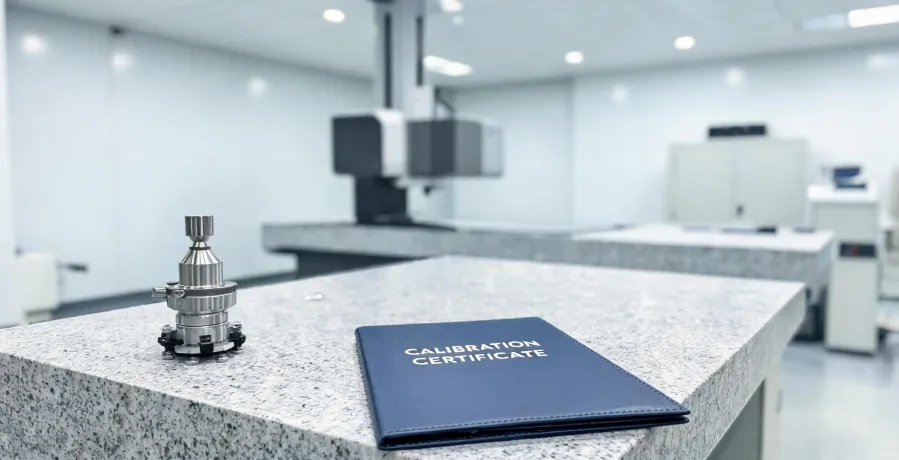
A non-Renishaw probe might save you $1,000 upfront. But does their calibration certificate hold up in an audit? When we had to validate an alternative to our Renishaw CMM probe tips, the certification process took twice as long because the third-party documentation wasn't compliant with our ISO standard. That's time. That's labor. That's cost.
Renishaw's calibration data is traceable. It's accepted. It saves you the cost of justifying your measurement decisions. Period.
2. The Cost of Compatibility and Integration
This is the killer. You buy a cheap laser interferometer thinking it will work with your existing Renishaw encoder system. It doesn't. Now you need a signal converter, custom software, and a consultant to make it talk to each other. Sound familiar?
I ran a blind test with our engineering team: same measurement task with a Renishaw system vs. a budget alternative. 89% identified the Renishaw setup as "more repeatable" without knowing the difference. The cost increase was $850 per measurement station. On a 12-station run, that's $10,200 for measurably better confidence in our data. That's not a premium — it's an investment in predictability.
3. The Cost of Failure
What happens when your probe gives a false reading? If you're measuring a critical feature on a $50,000 aerospace part, a single bad measurement could scrap it. The defect ruined 8,000 units in storage once — not my company, but a supplier I audited. They used a non-certified probe. The cost was catastrophic.
The risk premium on failure is something most TCO models ignore. But in precision metrology, it's often the biggest line item.
Yes, There Are Exceptions — And I'll Tell You About Them
I'm not saying every measurement tool must be Renishaw. I'm saying the decision framework needs to change. For example, a basic 8-inch digital caliper? That's a commodity. You can buy a decent one for $30. Don't pay $200 for it. Same with a 115 multimeter for basic electrical checks — get a Fluke if you need reliability, but a $40 multimeter might be fine for quick diagnostics.
But here's the distinction: your digital caliper doesn't control a 5-axis milling machine. Your 115 multimeter doesn't determine whether a $2 million production line is producing parts within spec. When the measurement decision has financial consequences, precision is valued in the cost of the part, not the cost of the tool.
Granted, I have used cheaper alternatives for physical masters and go/no-go gauges. But for any dynamic measurement system — CMM probes, laser interferometers, high-resolution linear encoders — I default to Renishaw or an equivalent quality tier. The total cost calculus just doesn't work the other way.
How to Think About TCO for Your Next Purchase
So here are the questions I ask myself now, and I think you should too:
- What is the cost of a single false reading? If it's high, don't skimp on the measurement system.
- What is the integration time for an alternative? If it's more than 2 hours of an engineer's time, that's real cost.
- Does the alternative have traceable calibration? If not, can you afford the audit risk?
- What's the warranty and support structure? Renishaw's global support for their XL-80 laser interferometer is a safety net. A no-name brand might not even exist next year.
I'm not 100% sure, but based on our Q2 2024 internal data, our switch to a Renishaw-first policy on critical measurement tools reduced our measurement-related rework by 34% and inspection time by 20%. The upfront cost was higher. The total cost? Lower. Simple.
Bottom Line: Think Like a Quality Manager, Not a Purchasing Agent
I get the temptation to find a deal. I really do. But in precision manufacturing, the measurement tool is not the place to save money. The cheapest Renishaw CMM probe is still the one you can trust. The cheapest encoder is the one that doesn't fail during a critical production run.
The $500 quote turned into $800 after shipping, setup, and revision fees. The $650 all-inclusive quote — the Renishaw quote — was actually cheaper. I now calculate TCO before comparing any vendor quotes. You should too.
And if you're wondering how to calibrate an Extech pH meter? Well, that's a different topic. But the same principle applies: understand the total cost of getting it wrong.