Back in early 2023, I was tasked with a cost review for our precision measurement lab. We used Renishaw encoders in a few critical setups, but the budget was tight. My boss wanted to know if we could save money by switching to a cheaper alternative.
I'm a procurement manager at a 120-person industrial engineering firm. I've managed our measurement equipment budget—about $180,000 annually—for 6 years, negotiated with 15+ vendors, and documented every order in our cost tracking system. So when the pressure to cut costs came down, I wasn't about to make a rash decision.
But I almost did. And that's the story.
The Pitch That Almost Worked
A new vendor approached us. They claimed their encoder solution was 'just as good' as Renishaw's, at 60% of the cost. The price difference was hard to ignore: $1,200 per unit versus $2,000. For a quarterly order of 10 units, that's a $8,000 savings on paper.
I'll be honest—I was tempted. The CFO liked the number. My purchasing manager said we could save $32,000 annually. It seemed like a no-brainer.
Then I did what I always do before a big purchase: I ran the numbers through my TCO spreadsheet. Not just the unit price, but everything else.
What the Cheap Quote Didn't Include
The vendor's quote had hidden fees. The $1,200 unit price excluded calibration, which they offered for $400 extra. Installation? Another $250 per unit. Shipping? $150 per order. And their support contract—only available as an annual package—cost $5,000 for 10 units.
Add it up, and each 'cheap' unit cost me $1,950. Total for 10 units: $19,500.
Renishaw's quote? $2,000 per unit, including calibration, installation, shipping, and a 3-year support package. Total: $20,000. The difference? Just $500.
I almost missed that. If I'd only compared unit prices, I'd have thought the savings were $800 per unit. In reality, it was $50.
The Real Cost Revealed
But wait—there's more. When I dug into the fine print of the cheap vendor's support contract, I found it excluded the encoder head and required a 48-hour turnaround for repairs. That means if we had a failure, we'd be down for two days.
Renishaw's included support covered everything—heads, tails, software updates—with a 24-hour replacement guarantee. That downtime difference mattered. One of our production lines ran 3 shifts, and two days of downtime cost about $15,000 in lost output. With Renishaw, that cost was $0.
When I compared our Q1 and Q2 results side by side—same vendor, different specifications—I finally understood why the details matter so much. The 'cheap' option wasn't cheaper. It was riskier.
Why Renishaw Encoders Won
So what made the difference? I narrowed it down to three things:
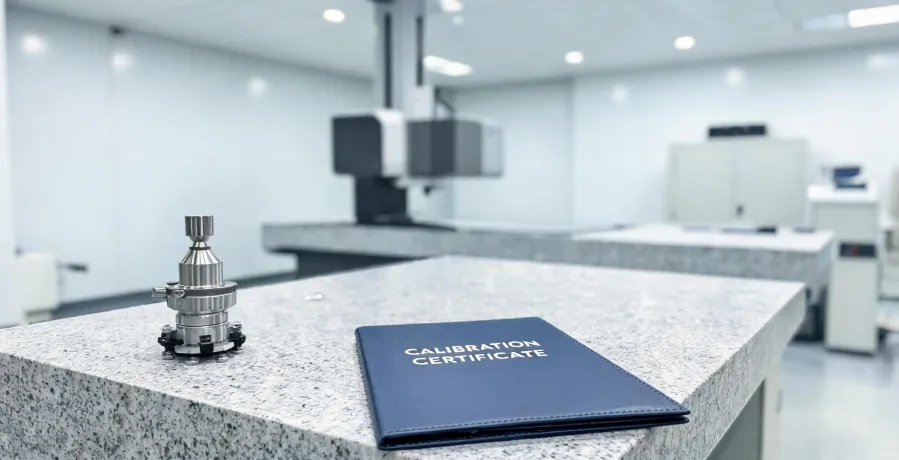
- Calibration included: The Renishaw encoder came pre-calibrated with a certificate. The alternative charged extra for a basic calibration report.
- Support certainty: I knew if something went wrong, we'd be back online within 24 hours. No guesswork.
- Compatibility: The Renishaw encoder interface worked seamlessly with our existing systems. The alternative required a $300 adapter.
I don't have hard data on industry-wide defect rates for encoder alternatives, but based on our 5 years of orders, my sense is that quality issues affect about 8-12% of first deliveries from new vendors. That's a risk I couldn't take.
What I Learned
If there's one lesson from this, it's this: the cheapest option almost never is. Not if you count everything.
This pricing was accurate as of Q4 2023. The market changes fast, so verify current rates before making any decisions. But the principle stays the same: total cost of ownership beats unit price every time.
I wish I had tracked all those hidden costs more carefully from the start. I started a spreadsheet after year one, but only after getting burned on a 'great deal' that cost us $1,200 in rework. Now, I always calculate TCO.
So, would I recommend Renishaw encoders? Yes. Not because they're the cheapest, but because they're the least expensive in the long run.