
-
The Real Question: Official Store or Trusted Distributor?
-
Price: Sticker Shock vs. Negotiated Deals
-
Support: Who Answers When Things Go Wrong?
-
Delivery and Inventory: Speed vs. Certainty
-
Authenticity and Compliance: The Hidden Cost
-
Practical Decision Guide
-
One Last Story (Why I'm a Bit Paranoid)
-
Bottom Line
The Real Question: Official Store or Trusted Distributor?
If you've ever managed purchasing for a precision-dependent shop, you know the drill. I handle acquisition for a 300-person manufacturing facility, and roughly a third of our annual budget goes to measurement gear. That includes everything from the Renishaw XL-80 laser interferometer to single pressure sensors & transmitters, a 302+ digital clamp meter for electrical diagnostics, and load cells from Rice Lake that we troubleshoot when they misbehave. Over the years, I've bought from both the Renishaw Store and authorized distributors. Here's how they compare.
This isn't a "one is always better" argument. I've found that each channel has a place, and the right choice depends on what you're buying, how you handle compliance, and whether you need manufacturer support.
Price: Sticker Shock vs. Negotiated Deals
People think the Renishaw Store is always more expensive because it's the official channel. In practice, the pricing is pretty transparent—you see list prices, and they rarely hide surprises. When I quoted the XL-80 laser interferometer directly, the price matched the published figure. Period.
Distributors, on the other hand, have wiggle room. I've gotten 5–10% off on large bundles. Maybe 8% average, I'd have to look at the exact numbers. But (and this is a big but) I've also seen distributors quote below list and then tack on shipping, handling, or calibration fees. A $300 discount turned into a $250 surcharge once I added everything.
Bottom line on price: you can save money with a distributor, but only if you ask for a full itemized quote. If they can't break it down, walk away.
Support: Who Answers When Things Go Wrong?
The XL-80 is a precision instrument. If it's out of calibration, it's dead weight. This is where the Renishaw Store shines — you get direct access to manufacturer support. When our first unit arrived with a questionable laser tube, one phone call to Renishaw got an RMA and a replacement within two days. It was painless.
With a distributor, the support quality is hit-or-miss. One of our vendors is excellent—they have a metrology specialist on staff. Another once told me to "read the manual" when I had a question about a Rice Lake load cell. That's not support; that's a brush-off.
Now, I'm not saying distributors never help. Some have deep technical chops. But the direct channel is more predictable.
Bottom line on support: if uptime matters and your internal team isn't full of metrology experts, buy from the Store. The support cost is baked into the price.
Delivery and Inventory: Speed vs. Certainty
Distributors often carry stock locally. If you need a single pressure sensor or transmitter by Friday, a distributor with a warehouse can ship next day. That's a real advantage.
The Renishaw Store usually ships factory-direct. For our XL-80 order, the lead time was about a week—fine for a planned calibration project, but not for a breakdown emergency.
That said, I've been burned by distributors claiming "in stock" and then backordering. It happened with a 302+ digital clamp meter. They showed inventory online, but it wasn't physical stock. I lost three days. So verify availability by phone before you rush an order.
For any high-value shipment, I always request signature confirmation (USPS offers this service, and I use it even if it costs extra). It saved me once when a package was left in the lobby and disappeared.
Authenticity and Compliance: The Hidden Cost
Here's where things get tricky. Per FTC guidelines (ftc.gov), if a reseller claims a product is "original" or "factory calibrated," they need to substantiate that claim. That's a good fence to know when you're comparing quotes.
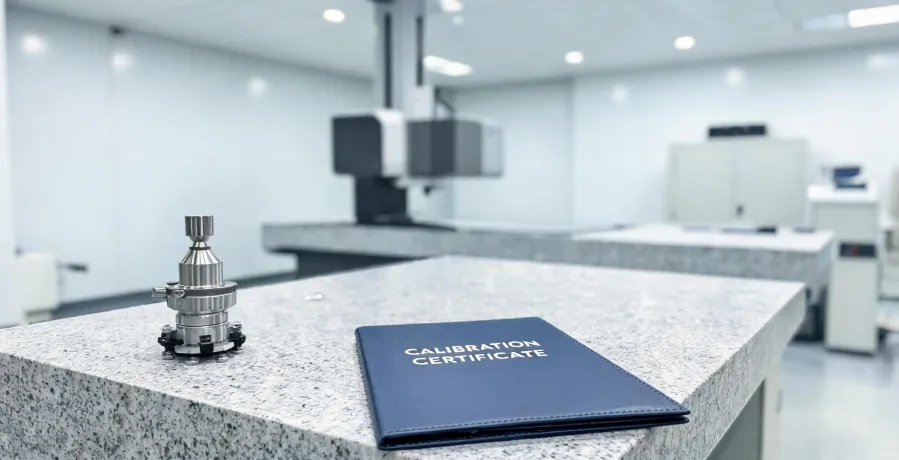
The Renishaw Store guarantees authenticity simply by being Renishaw. You get full documentation, traceable serial numbers, and the official calibration certificate. This matters when your quality auditors ask for evidence.
With an unauthorized distributor, you risk getting a grey-market unit. I once bought what I thought was a genuine encoder from a broker. It looked right, but the serial number didn't match Renishaw's database. That cost me – not just the price, but the administrative time to chase down a return and a refund. I ended up spending $400 on a certified replacement. That "savings" evaporated.
Rule of thumb: if you're buying high-value items like the XL-80, there's no reason to risk authenticity. Use the Store. For cheap consumables or generic gear like a 302+ digital clamp meter, a distributor is fine.
Practical Decision Guide
So, how do you choose? Here's my honest take based on hundreds of orders:
- Choose Renishaw Store when: you're buying capital equipment (XL-80, encoders, probes), you need official calibration paperwork, or you want direct manufacturer support.
- Choose a distributor when: you need fast delivery of standard items (pressure sensors, transmitters, clamp meters, load cell accessories), you have a relationship and get good prices, and you can verify their certifications.
And if you're troubleshooting a Rice Lake load cell, the quickest win is using a 302+ digital clamp meter to check the excitation voltage and the load cell's output with a simple multi-meter. That's a practical task where the brand of the clamp meter matters less than the operator's skill. But for the overall accuracy of your equipment, the XL-80 gives you the gold standard in measuring machine performance.
One Last Story (Why I'm a Bit Paranoid)
I remember in 2022, we needed an optical linear encoder in a rush. A new distributor quoted a price 11% lower than Renishaw Store. I nearly took it. But then I asked for proof of origin. They sent a photo of a different product. That was a red flag. I went with the Store, and the encoder has been running fine for two years. The distributor vanished from our vendor list. Sometimes the boring, predictable choice is the best one.
Bottom Line
There's no single always-right answer. For most critical precision equipment, I'll keep buying directly from Renishaw Store – the support and documentation justify the cost. For supporting gear like sensors, transmitters, and clamp meters, a good distributor saves time and money. Know what you're buying, and don't be afraid to ask the hard questions.
And if you're ever in doubt, remember this: real support and genuine parts are worth more than a few hundred dollars saved. Prices as of January 2025; verify current rates at renishaw.com.