
Stop Searching by Price First. Start with the Catalog.
Look, I used to think that buying a 0-12 micrometer set or a 375 FC true RMS AC/DC clamp meter was simple. You punch it into a search engine, sort by price, buy the thing. That's how I did it. It's how most beginners do it.
That routine cost me $3,200 and a 3-day production delay in September 2022. Here's the thing: I now believe that for mission-critical B2B equipment, transparent sourcing from a manufacturer's catalog is more trustworthy than hunting for a 'deal' online.
I'm an engineer handling metrology orders. In my first year (2017), I made the classic rookie error of ignoring the specs. But this? This was different. This was a failure of trust, not just specs.
The $3,200 Mistake
We needed a specific set of CMM probe tips for a rush order. The quote from a standard supplier for the official Renishaw catalog items was $4,800. I found a 'compatible' set online for $1,600. Same dimensions. Looked good on my screen.
I ordered the $1,600 set. We installed them. The first measurement run was a disaster. The thread tolerances were loose. The tip radius varied by 0.02mm. Not ideal, not terrible—but serviceable? No. The customer rejected the batch.
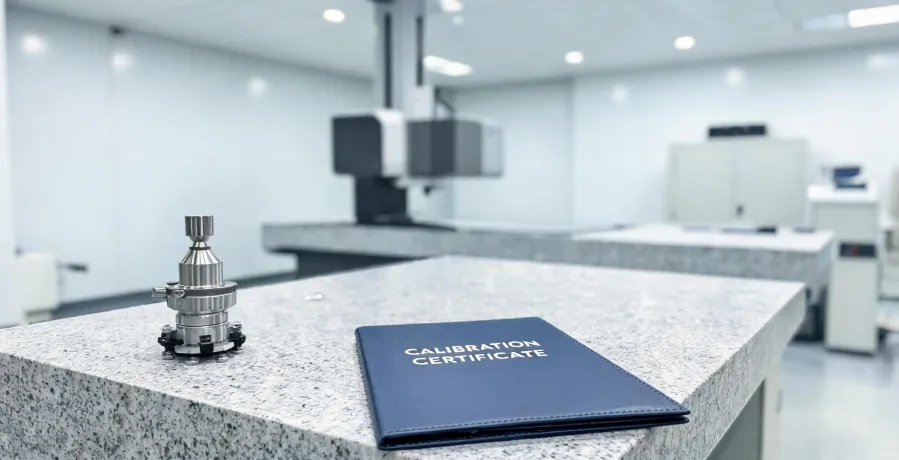
The result: $890 in immediate scrap costs, a 1-week delay for re-certification, and $2,310 in lost production time. Total: $3,200. Plus a damaged relationship with the QC manager. Period. That's when I learned the lesson: the lowest price on a search page is usually a trap for hidden costs. The Renishaw catalog item? It came with a certificate of compliance.
Why I Now Default to the Catalog (and Why You Should Too)
Everything I'd read about online procurement said to leverage marketplaces for the best price. In practice, I found the opposite: for precision items, the transparent list price from a catalog is almost always the lower total cost. Here is why:
1. The Hidden Cost of 'Compatibility'
That 'compatible' CMM probe tip was physically the same size. But it wasn't metrologically the same. The Renishaw logo isn't just branding; it's a promise of a specific tolerance chain. The generic part caused a cascade failure. This is true for almost any measurement gear. A cheap 0-12 micrometer set might measure fine today, but what about its drift next week? The catalog provides traceability.
2. The Information Asymmetry
Online sellers list 'High Quality' and 'Precision Grade'. That's noise. The Renishaw catalog lists data: measurement standard, material grade, temperature range, calibration intervals. When you buy a 375 FC true RMS AC/DC clamp meter from a generic store, you're gambling on the specs. When you buy it from a known distributor's catalog, you're buying verified information. Transparency reduces risk.
3. The 'What's NOT Included' Trap
The vendor who lists all fees upfront—even if the total looks higher—usually costs less in the end. I've learned to ask 'what's NOT included' before 'what's the price.' The Renishaw catalog told me exactly what I was getting. The cheap online listing didn't mention the lack of certification or calibration data. That omission was the real price.
Addressing the Pushback: 'But the Catalog is Expensive!'
I get it. I used to think the same way. The initial price tag of a Renishaw encoder or CMM probe is higher than a knock-off. But consider this: How do you measure the cost of a failure?
This isn't about buying a pen. If you're buying a 0-12 micrometer set for a high-tolerance job, the cost of a bad part is the rework, the delay, and the customer frustration. The 'savings' from buying the cheap part evaporate the moment the first measurement fails.
Per FTC guidelines on advertising (ftc.gov), claims about 'equivalence' need evidence. The generic seller rarely provides that evidence. The catalog supplier does.
Everything I'd read about saving money said to buy generic. My experience with this specific $3,200 mistake suggests otherwise. Trust the catalog. It costs less in the long run.
The Workflow: How I Buy Now
This was accurate as of Q4 2023. Pricing changes, but the principle doesn't.
- Step 1: Identify the critical component (e.g., an encoder for a CNC axis).
- Step 2: Go to the manufacturer's catalog (like Renishaw for encoders or probes). Get the official part number and specification.
- Step 3: Call a distributor. Ask for the transparent total cost.
- Step 4: Compare the cheap online option. If the price difference is more than 20%, investigate why. It's probably a hidden compromise.
- Step 5: Buy the catalog part. Sleep well at night.
Honestly, I'm not sure why the industry tolerates this level of trust gaming. My best guess is that the 'lowest price' model works for consumables, but fails for precision tools. Simple.
Conclusion: Trust the Transparent Price
Some people will argue that you can find great deals online. You can. I did. But for the critical 20% of your purchases that define your quality, the risk is too high. The vendor who shows you the Renishaw catalog is admitting their proposition. The vendor hiding the specs is hiding the risk.
I still believe that for precision measurement, you should buy by the catalog, not by the price tag. The transparent price is the trustworthy price.