There's No One 'Right' Measurement Solution—And That's Okay
When I first started handling measurement equipment orders back in 2017, I assumed every precision task had a single best tool. You needed high accuracy? You bought a Renishaw CMM probe. You needed material analysis? You got a Raman microscope. Simple, right?
Three years and roughly $12,000 in documented mistakes later, I can tell you: that's not how it works. The right measurement solution depends entirely on what you're measuring, how often, to what tolerance, and—critically—what your actual budget looks like when you factor in everything beyond the price tag.
Here's a framework I wish someone had given me in 2017.
The Three Most Common Measurement Scenarios
In my experience, most measurement challenges fall into one of three categories. Your choice depends on which one you're facing.
Scenario A: Discrete Part Verification (The CMM World)
What this looks like: You're manufacturing machined parts, injection-molded components, or assemblies. You need to verify dimensions, form tolerances, or positional accuracy. Quantities range from prototype batches to production runs.
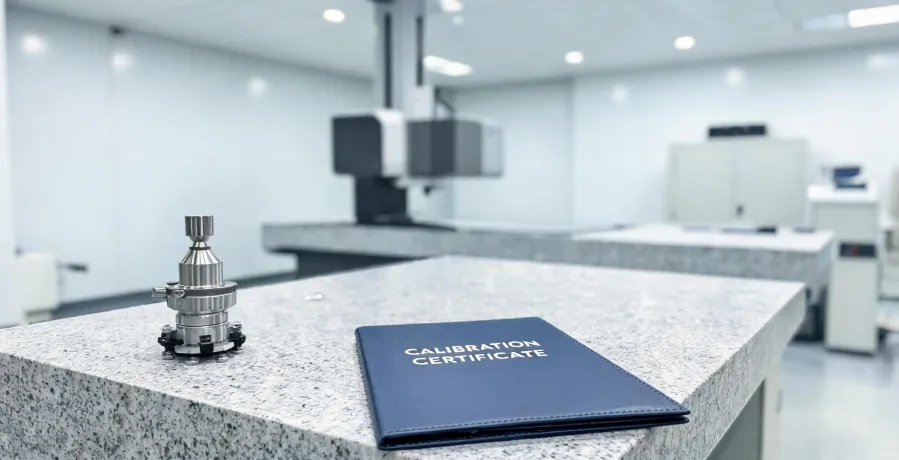
My advice here: Go with a coordinate measuring machine (CMM) probe setup. Specifically, look at Renishaw's REVO 5-axis system or the classic TP20 touch-trigger probe. For production environments, the repeatability and automation potential make this non-negotiable.
But here's the kicker (learned the hard way): Don't just buy the probe. Buy the whole system—controller, software, fixturing, training. I once approved a "bargain" CMM probe package that saved $1,200 upfront. The catch? We didn't have the right controller interface. That oversight cost us three weeks of downtime and $3,400 in emergency shipping for the correct components.
Your total cost of ownership includes setup, integration, and training. The cheapest probe is rarely the cheapest solution.
Scenario B: Microstructural & Chemical Analysis (The Raman World)
What this looks like: You're in R&D, quality control for materials science, or failure analysis. You need to identify contaminants, verify coatings, or characterize crystalline structures. Tolerance isn't the issue—composition is.
My advice here: A Renishaw Raman microscope is your tool. The inVia series or the RA802 pharmaceutical analyzer (if that's your field) deliver the spectral fingerprinting you need. But only if your sample throughput justifies the investment.
What I got wrong initially: I thought Raman was the answer for everything involving "material identification." It isn't. For simple chemical presence/absence checks, a benchtop FTIR at 1/10 the cost might do the job. For high-throughput production screening, a dedicated sensor system (more on that below) could be better. Raman excels when you need nondestructive, spatially resolved chemical mapping at the micron scale. If that's not your requirement, don't pay for it.
Scenario C: General Dimensional QC (The Sensor & Gage World)
What this looks like: You need basic dimensional checks—length, diameter, depth—with moderate accuracy (±0.005 inch or similar). You're not running a CMM program for every part. Think inspection departments, maintenance shops, or first-article checks.
My advice here: Don't overthink it. A quality micrometer set (0-6 inches) and a 12-inch digital caliper from reputable brands handle 80% of these tasks. But—and this is the part that tripped me up—the sensor ecosystem matters if you're comparing data across systems.
When people ask me how Renishaw sensors compare with Omron and Keyence, here's the honest answer: it depends on your integration needs. Renishaw encoders (like the BISS-C or TONiC series) excel in high-precision motion control—think CNC machines and semiconductor equipment. Omron and Keyence have broader product lines in factory automation, including photoelectric and proximity sensors. If you need a linear encoder for a positioning stage, Renishaw is often the right call. If you need a general-purpose sensor for bin detection or presence checking, Omron or Keyence are more cost-effective.
The mistake I made: trying to force one brand into every slot. It doesn't work. I spent $2,100 on a specialized encoder setup for a simple conveyor sensor application. A $90 Omron sensor would have done the job perfectly.
How to Determine Which Scenario You're In
Here's the decision tree I now use (and maintain as a checklist for our team):
- What's your primary measurement target? Dimensions? → Scenario A or C. Chemistry/materials? → Scenario B.
- What's your accuracy requirement? Submicron (±0.0005")? → Scenario A. ±0.001-0.005"? → Scenario C can work. Micron-scale chemical mapping? → Scenario B.
- What's your throughput? 1-10 parts per day? → Hand gages (Scenario C) or manual CMM. 100+ parts/hour? → Automated CMM in Scenario A or dedicated sensors in Scenario C.
- What's your integration context? New machine tool? → Renishaw encoder. Existing production line? → Look at your current PLC/sensor ecosystem (Omron/Keyence might integrate more easily).
I've personally caught 47 potential specification mismatches using this checklist in the past 18 months. It's saved us roughly $15,000 in prevented wrong purchases.
The Bottom Line
Measurement solutions aren't one-size-fits-all. The best tool for your job depends on what you're measuring, how accurately, at what volume, and within which infrastructure.
My biggest lesson? Don't buy on brand alone. Don't buy on price alone. Buy on total fit—and that includes training, integration, and the cost of being wrong.
Prices as of June 2024: Renishaw CMM probe systems start around $4,000-8,000 depending on configuration; Raman microscopes range from $60,000-150,000+; quality micrometer sets run $50-150; digital calipers cost $30-120. Verify current pricing directly with suppliers.