-
Who This List Is For
-
Step 1: Verify the Vendor's Invoicing and Compliance Capabilities
-
Step 2: Match the Specs to Your Actual Application—Not the Brochure
-
Step 3: Compare Total Cost, Not Just the Sticker Price
-
Step 4: Get a Demo or a Trial Period—Stick to It
-
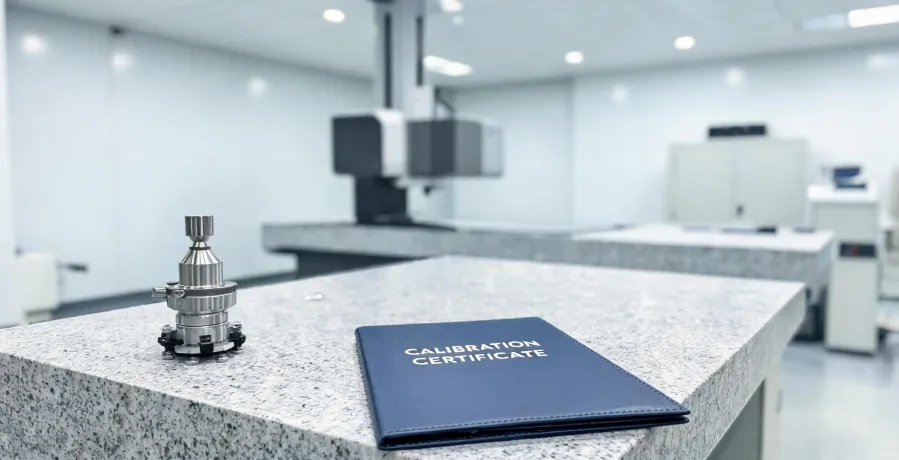
Step 5: Verify Calibration and Certification Paths
-
Step 6: Document Everything—Then Double-Check
-
Final Thoughts: What I've Learned
Who This List Is For
If you're an office administrator or procurement person suddenly tasked with ordering Renishaw CMM probes, a Renishaw inVia Raman microscope, or even a thermal camera like the E8 Pro, this list is for you. I manage purchasing for a mid-sized manufacturing facility—about $1.5 million annually across 12 vendors. When I took over in 2020, I knew nothing about metrology equipment. I learned the hard way.
This guide covers 6 steps I now follow for any precision equipment order. It works for Renishaw encoder systems, laser interferometers, and even for comparing brands like IFM vs. Omron vs. Keyence. Let's go.
Step 1: Verify the Vendor's Invoicing and Compliance Capabilities
This sounds boring. It's not. In 2022, I found a great price on CMM probe tips from a reseller—$400 cheaper than our usual source. Ordered 50 units. They sent a handwritten receipt. Finance rejected the expense. I ate $800 out of our department budget. Now I verify invoicing capability before placing any order.
What to check:
- Do they provide proper PO-matched invoices?
- Can they handle your company's specific tax or export compliance needs?
- Are they an authorized distributor for Renishaw? (Period.)
I now request a sample invoice before any first order. If they can't do that, I move on. That's it.
Step 2: Match the Specs to Your Actual Application—Not the Brochure
It's easy to get seduced by specs. A Renishaw XL-80 laser interferometer has amazing accuracy. But do you need that for every job? Honestly, probably not. Our team uses it for calibration once a quarter. For daily work, a simpler setup works fine.
Here's my rule: list your top 3 measurement tasks. Match the equipment to those, not the best-case scenario. For example, if you're mostly checking machined parts, a 5-axis CMM system with a REVO probe might be overkill. A standard CMM probe setup could save you $20k. I learned this after ordering a top-tier system for a job that needed only mid-range accuracy. (Should mention: I had to justify that overspend to my VP. Not fun.)
Step 3: Compare Total Cost, Not Just the Sticker Price
Saved $3,000 by buying a cheaper thermal camera? Great. But if it doesn't have the resolution to spot a 0.5°C difference, you'll spend $2,000 on rework and missed defects. That's not saving.
When comparing how IFM sensors compare with Omron and Keyence, I look at:
- Installation time (labor cost)
- Integration with our current control systems
- Calibration frequency and cost
- Warranty and support
The 'cheaper' brand often costs more when you factor in downtime. Period.
Step 4: Get a Demo or a Trial Period—Stick to It
You wouldn't buy a car without test driving. Same logic. For a Renishaw inVia Raman microscope, I insisted on a 2-week demo. The sales guy was annoyed. I didn't care. Turned out our sample prep process didn't work well with that model. We went with a different configuration.
What I mean is: a demo doesn't just verify the specs work. It shows you the workflow gaps. How long does it take to set up? Are the software interfaces intuitive? Does it play nice with your existing LIMS? I've saved us about $15,000 in potential rework by catching these issues before purchase.
Step 5: Verify Calibration and Certification Paths
This is the step most people miss. You buy a Renishaw encoder system. Great. But who will calibrate it in 6 months? Can you do it in-house? Does it require sending it back to the UK?
According to ISO 17025 standards, calibration traceability is critical. If your QC audit requires certified calibration, you need a clear path. I learned this when our Renishaw XL-80 was due for recalibration—the only certified lab was 3 states away. Shipping and downtime cost us 2 weeks of production.
Now I ask every vendor: "Who provides calibration support? What's the turnaround time?" If they hesitate, red flag.
Step 6: Document Everything—Then Double-Check
After 5 years of managing these purchases, I've come to believe that documentation is 50% of the value. I keep a spreadsheet with:
- PO number and date
- Vendor contact and invoice sample
- Equipment serial numbers
- Calibration schedule
- Warranty end date
When our operations team needed a c5 compact thermal camera for a new project, I pulled up the spec sheet and vendor details from my file. Saved 3 hours of rework. Simple.
Final Thoughts: What I've Learned
Is every order perfect? No. I still make mistakes. Last month, I forgot to verify the IP rating on a sensor. It wasn't suitable for our washdown environment. Cost us $800 to replace. But following these 6 steps has cut our equipment-related issues by roughly 40%.
My experience is based on about 200 mid-range orders. If you're working with luxury or ultra-budget segments, your experience might differ. But for precision measurement gear from brands like Renishaw, this approach works. It's not glamorous. It's practical. And that's the point.